 1388xx888xx
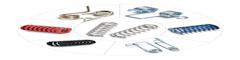


Вы когда-нибудь задумывались, почему ваш механизм работает не так гладко, как хотелось бы? Может быть, проблема кроется в пружине? Пружины – это незаменимые компоненты в множестве устройств, от простых часов до сложных промышленных машин. Но выбрать подходящую пружину может быть непросто. В этой статье мы рассмотрим все аспекты выбора идеальной пружины, ответим на ваши вопросы и поможем вам принять informed решение. Давайте начнём с основ: что такое пружина и почему она так важна?
Пружина – это упругий элемент, который накапливает механическую энергию при деформации и возвращает её при снятии нагрузки. Без пружин многие механизмы просто не смогли бы функционировать. Представьте себе автомобильную подвеску без пружин – каждая кочка была бы мучительной. Или механические часы – без пружин они не могли бы хранить энергию для работы. Но как выбрать пружину, которая подходит именно для вашего механизма? Это зависит от множества факторов, таких как тип нагрузки, материал, размеры и условия эксплуатации.
Прежде всего, задайте себе вопрос: какой тип пружины мне нужен? Существуют различные типы пружин, включая винтовые пружины, листовые пружины, торсионные пружины и многие другие. Винтовые пружины, например, commonly используются в подвесках и амортизаторах, в то время как листовые пружины often применяются в heavy-duty applications, таких как грузовики. Торсионные пружины идеальны для систем, где требуется крутящий момент, как в дверных механизмах. Но как определить, какой тип лучше всего подходит для вашего случая? Это требует понимания нагрузки, которую должна выдерживать пружина.
Нагрузка на пружину может быть статической или динамической. Статическая нагрузка – это постоянная сила, действующая на пружину, в то время как динамическая нагрузка involves изменения силы over time. Например, в автомобильной подвеске пружина подвергается dynamic loading due to road irregularities. Если пружина не designed для such conditions, она может быстро выйти из строя. Поэтому при выборе пружины важно consider the expected load cycle. How many cycles will the spring undergo? What is the maximum and minimum load? Эти вопросы помогут вам выбрать пружину с appropriate fatigue life.
Material selection is another critical aspect. Пружины typically изготавливаются из стали, нержавеющей стали, или других сплавов. Стальные пружины offer high strength and durability, but они могут быть подвержены коррозии в влажных условиях. Нержавеющая сталь provides corrosion resistance, но может быть менее прочной в некоторых applications. Для high-temperature environments, могут потребоваться specialty alloys. Как выбрать материал? Consider the operating environment: будет ли пружина exposed to moisture, chemicals, or extreme temperatures? Также, budget constraints may play a role, as stainless steel springs are generally more expensive.
Размеры пружины также имеют crucial значение. Длина, диаметр и количество витков affect the spring rate, which is the force required to compress or extend the spring per unit length. Spring rate определяется by the material and geometry. Например, более толстая проволока или меньшее количество витков увеличивают spring rate, делая пружину более жёсткой. Но как calculate the ideal spring rate for your mechanism? Это требует engineering calculations based on the desired deflection and load. Если spring rate слишком высок, механизм может быть слишком жёстким; если слишком низок, он may not provide sufficient support.
Условия эксплуатации – ещё один key factor. Будет ли пружина used in a high-vibration environment? Или в условиях, где важна точность, как в медицинских устройствах? Для applications с high vibration, могут потребоваться пружины с damping characteristics или special coatings to reduce wear. В precision instruments, пружины должны иметь minimal hysteresis and consistent performance. How to ensure reliability? Choose springs from reputable manufacturers who provide certifications and test data.
Now, let's delve deeper into the types of springs. Винтовые пружины являются most common and versatile. Они can be compression springs, extension springs, or torsion springs. Compression springs designed to resist compressive forces, как в mattresses или industrial presses. Extension springs, наоборот, designed to extend under load, как в garage doors. Torsion springs apply torque, как в clothespins или vehicle suspensions. Но какой тип выбрать для your specific mechanism? Analyze the direction of force and the required movement.
Листовые пружины consist of multiple layers of metal and are used in applications where space is limited but high load capacity is needed, such as in leaf spring suspensions for vehicles. Они offer excellent durability but can be heavier and less flexible than coil springs. Торсионные пружины store energy through twisting motion and are ideal for rotational systems. For example, in mouse traps or counterbalance mechanisms. Но are they suitable for your project? Consider if rotational force is involved.
Beyond these, there are specialty springs like gas springs, which use compressed gas to provide force, often used in automotive hoods or office chairs. Они offer smooth and controlled motion but can be more complex and expensive. Constant force springs provide a nearly constant force throughout their deflection, useful in applications like tape measures or retractable cords. How to decide? Evaluate the need for constant force versus variable force.
Design considerations are paramount. При проектировании механизма с пружиной, важно calculate the spring's working range, ensure it does not exceed its elastic limit to prevent permanent deformation, and consider factors like stress concentrations. Используйте formulas such as Hooke's Law (F = kx, where F is force, k is spring constant, and x is deflection) to determine specifications. Но what if your mechanism has unique requirements? Consult with engineers or use simulation software to model the spring's behavior.
Manufacturing processes also affect spring performance. Пружины can be cold-formed or hot-formed, depending on the material and size. Cold-forming is common for smaller springs and provides good precision, while hot-forming is used for larger springs to avoid material cracking. Surface treatments like plating or coating can enhance corrosion resistance and reduce friction. How to ensure quality? Work with manufacturers who adhere to standards like ISO 9001 and provide material certifications.
Testing and validation are essential. Before finalizing your choice, test the spring under simulated conditions to check for fatigue, creep, or other failures. Use methods like cycle testing or load testing to verify performance. Но how many tests are enough? It depends on the application's criticality; for safety-critical systems, extensive testing is mandatory.
Cost considerations cannot be ignored. Пружины vary in price based on material, size, and quantity. Custom springs may cost more but offer better fit for your needs. Bulk orders often reduce per-unit cost. How to balance cost and performance? Define your requirements clearly and get quotes from multiple suppliers to compare.
Environmental impact is increasingly important. Choose materials that are recyclable or environmentally friendly if possible. For example, some springs are made from recycled steel. How to make a sustainable choice? Consider the life cycle of the spring and opt for designs that minimize waste.
Now, let's address common mistakes in spring selection. One error is underestimating the load, leading to spring failure. Another is ignoring environmental factors, causing premature corrosion. Also, choosing the wrong type of spring for the application, such as using a compression spring where an extension spring is needed. How to avoid these? Thoroughly analyze your mechanism's requirements and consult experts if needed.
Case studies can provide insights. Например, in the automotive industry, springs are critical for safety and comfort. A well-chosen spring in a car's suspension can improve ride quality and durability. In aerospace, springs must withstand extreme conditions and have high reliability. Learning from such examples can guide your selection.
Future trends in spring technology include the use of smart materials that can change properties in response to stimuli, or additive manufacturing for custom springs. How might these advancements affect your choices? Stay informed about new developments to leverage the latest innovations.
In conclusion, choosing the ideal spring for your mechanism requires careful consideration of type, load, material, size, conditions, and cost. By asking the right questions and using the information provided, you can make an informed decision. Remember, a well-chosen spring not only ensures optimal performance but also enhances the longevity and reliability of your mechanism. So, take the time to evaluate your needs and find the perfect spring today!
If you have more questions, feel free to reach out to professionals or use online resources for further guidance. Happy spring hunting!