 1388xx888xx


В мире механики и инженерии винтовые пружины играют незаменимую роль, выступая ключевым элементом, который обеспечивает долговечность, надежность и эффективность бесчисленных устройств — от простых бытовых приборов до сложных промышленных машин. Эти скромные, но мощные компоненты, скрытые внутри механизмов, являются настоящим секретом прочности, поглощая удары, накапливая энергию и поддерживая стабильность в самых demanding условиях. В этой статье мы глубоко погрузимся в мир винтовых пружин, раскрывая их фундаментальные принципы, разнообразие типов, материалы изготовления, широкий спектр применений, современные инновации и практические советы по выбору. Мы также рассмотрим историю их развития, методы производства, стандарты качества и будущие тенденции, чтобы дать вам полное понимание того, почему эти пружины так важны для ваших механизмов. Будь вы инженер, дизайнер или просто любознательный энтузиаст, эта статья предоставит ценные insights, которые помогут вам оптимизировать производительность и продлить срок службы вашего оборудования.
Что такое винтовые пружины и как они работают
Винтовые пружины — это механические элементы, изготовленные из проволоки, свернутой в спиральную или винтовую форму. Их основная функция заключается в накоплении и высвобождении механической энергии при деформации, что позволяет им поглощать вибрации, поддерживать нагрузки и возвращаться к исходной форме после снятия напряжения. Принцип работы основан на законе Гука, который гласит, что сила, необходимая для сжатия или растяжения пружины, пропорциональна величине деформации. Это означает, что пружины обеспечивают предсказуемое и линейное сопротивление, что делает их идеальными для точного контроля движений в механизмах. В зависимости от конструкции, винтовые пружины могут быть сжатия, растяжения или кручения, каждая из которых tailored для specific applications. Например, пружины сжатия используются в подвесках автомобилей, чтобы поглощать неровности дороги, в то время как пружины растяжения применяются в дверных механизмах для обеспечения плавного закрытия. Крутильные пружины, с другой стороны, работают на скручивание и часто встречаются в часах или зажимах. Благодаря своей универсальности и надежности, винтовые пружины стали неотъемлемой частью modern engineering, contributing to the durability and efficiency of countless systems. Их способность to handle cyclic loading without failure makes them a cornerstone of mechanical design, ensuring that your mechanisms remain strong and functional over time.
Типы винтовых пружин и их особенности
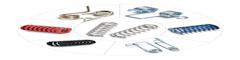
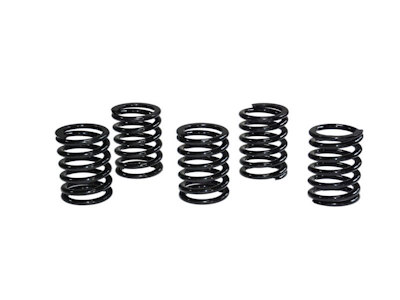
Винтовые пружины come in various types, each designed to meet specific requirements based on the application. The most common types include compression springs, extension springs, torsion springs, and conical springs. Compression springs are characterized by their open coils and are used to resist compressive forces; they are widely employed in automotive suspensions, industrial machinery, and consumer products like pens and mattresses. Their design allows them to absorb shock and maintain pressure, making them essential for applications where space is limited but high load-bearing capacity is needed. Extension springs, on the other hand, have hooks or loops at the ends and are used to absorb and store energy when stretched; they are common in garage doors, trampolines, and agricultural equipment. These springs provide a pulling force and are ideal for situations where components need to be held together or returned to a default position. Torsion springs work by twisting around an axis and are used to apply torque or rotational force; examples include clothespins, mouse traps, and vehicle brakes. They are perfect for applications requiring precise angular movement. Conical springs, with their tapered shape, offer progressive resistance and are used in valves and seats to provide variable stiffness. Additionally, there are specialty springs like constant force springs and die springs, which cater to niche applications. Understanding these types is crucial for selecting the right spring for your mechanism, as each has unique properties such as spring rate, deflection, and fatigue life. By choosing the appropriate type, you can enhance the strength and longevity of your equipment, ensuring optimal performance.
Материалы для изготовления винтовых пружин
Выбор материала для винтовых пружин is critical to their performance, durability, and suitability for different environments. Common materials include high-carbon steel, stainless steel, alloy steel, non-ferrous metals like brass and phosphor bronze, and even plastics for specific applications. High-carbon steel, such as music wire or hard-drawn wire, is popular due to its high tensile strength and excellent spring properties; it is often used in general-purpose springs where cost-effectiveness and reliability are key. Stainless steel, particularly grades like 302 or 316, offers corrosion resistance, making it ideal for harsh environments like marine or chemical industries. Alloy steels, such as chrome-vanadium or silicon-manganese, provide enhanced strength and fatigue resistance, suitable for high-stress applications in automotive or aerospace sectors. Non-ferrous materials like brass and phosphor bronze are chosen for their non-magnetic properties and good corrosion resistance, often used in electrical components or marine hardware. For extreme conditions, exotic materials like Inconel or titanium may be employed, offering superior resistance to heat and corrosion. The material selection also depends on factors like operating temperature, load requirements, and environmental exposure. For instance, springs in engines must withstand high temperatures, while those in medical devices need to be biocompatible. Advances in material science have led to the development of composite and coated springs, which further improve performance. By understanding the properties of these materials, you can ensure that your springs not only provide the necessary strength but also endure the demands of your mechanism, ultimately contributing to its overall robustness.
Применение винтовых пружин в различных отраслях
Винтовые пружины находят применение в virtually every industry, underscoring their versatility and importance. In the automotive sector, they are used in suspension systems, clutch mechanisms, and valve trains to absorb shocks, reduce vibrations, and ensure smooth operation. For example, coil springs in car suspensions help maintain ride comfort and handling by compressing and rebounding over bumps. In aerospace, springs are critical in landing gear, control systems, and safety devices, where reliability and precision are paramount due to extreme conditions. The industrial machinery industry relies on springs for presses, conveyors, and tools to provide force and movement control, enhancing efficiency and safety. In consumer goods, from watches and toys to household appliances, springs enable functionality and durability; think of the spring in a ballpoint pen that retracts the tip or the one in a washing machine that balances the drum. The medical field uses springs in devices like surgical instruments and prosthetics, where sterility and precision are essential. Even in construction, springs are employed in doors, windows, and seismic dampers to improve safety and performance. Each application demands specific spring characteristics, such as load capacity, size, and environmental resistance. By integrating well-designed springs, industries can achieve higher productivity, reduced maintenance costs, and improved product lifespan. This widespread use highlights how винтовые пружины are indeed the secret to strength in mechanisms, providing the resilience needed to handle daily stresses and unexpected challenges.
Инновации и будущее винтовых пружин
С развитием технологий винтовые пружины continuously evolve, with innovations aimed at enhancing performance, sustainability, and customization. One significant trend is the use of advanced materials, such as shape memory alloys (e.g., Nitinol), which can return to a predefined shape after deformation, opening up new possibilities in robotics and biomedical devices. Additive manufacturing, or 3D printing, allows for the creation of complex spring geometries that were previously impossible, enabling tailored solutions for specific applications. For instance, printed springs can be integrated directly into components, reducing assembly time and weight. Smart springs embedded with sensors can monitor load, temperature, and fatigue in real-time, providing data for predictive maintenance and improving safety in critical systems like aviation or energy. Environmental considerations are also driving innovation, with a focus on recyclable materials and energy-efficient production processes. In the future, we may see springs that self-heal or adapt to changing conditions, further boosting their durability. Computational modeling and simulation tools are becoming more sophisticated, allowing engineers to optimize spring designs virtually before physical prototyping, saving time and resources. These advancements not only make springs more efficient but also expand their applications into emerging fields like renewable energy and electric vehicles. By staying abreast of these innovations, you can leverage the latest spring technologies to future-proof your mechanisms, ensuring they remain strong and competitive in a rapidly changing world.
Как выбрать правильную винтовую пружину для вашего механизма
Выбор подходящей винтовой пружины is a nuanced process that requires careful consideration of several factors to ensure optimal performance and longevity. Start by defining the application requirements: determine the type of load (compression, extension, or torsion), the maximum and minimum forces involved, the available space for the spring, and the environmental conditions such as temperature, humidity, and exposure to chemicals. Calculate the spring rate, which is the force per unit deflection, to match the desired stiffness; this can be done using formulas based on material properties and dimensions. Consider the material based on corrosion resistance, strength, and cost; for example, use stainless steel for wet environments or alloy steel for high-stress scenarios. The end configurations, such as closed and ground ends for compression springs or hooks for extension springs, affect how the spring interfaces with other components. Fatigue life is crucial for applications with cyclic loading; ensure the spring is designed to withstand the expected number of cycles without failure. Standards like ISO or ASTM provide guidelines for quality and testing. It's also wise to consult with spring manufacturers or use online calculators and software tools for precise design. Prototyping and testing under real conditions can reveal any issues before full-scale implementation. By taking a systematic approach to selection, you can avoid common pitfalls like over-sizing or under-sizing, which can lead to mechanism failure. Ultimately, the right spring will enhance the strength and reliability of your device, making it a worthwhile investment in the long run.
Заключение: Укрепляйте ваши механизмы с помощью винтовых пружин
В заключение, винтовые пружины являются фундаментальным элементом, который скрепляет механизмы, обеспечивая прочность, гибкость и долговечность. От их базового принципа работы до передовых инноваций, эти компоненты доказали свою незаменимость across industries. By understanding their types, materials, applications, and selection criteria, you can harness their full potential to optimize your designs. Whether you're working on a simple gadget or a complex machine, investing in quality springs will pay dividends in performance and reliability. Embrace the future with smart and sustainable spring solutions, and let винтовые пружины be the secret strength that keeps your mechanisms running smoothly for years to come.