 1388xx888xx



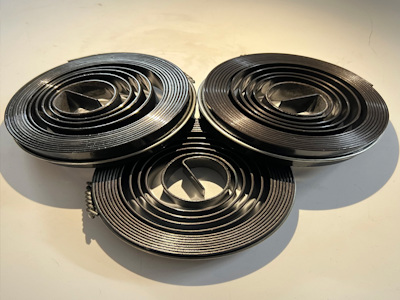
В мире механики и инженерии сжатые пружины часто остаются незамеченными, но они являются настоящей силой, скрытой внутри ваших устройств. Представьте себе: пружина, аккуратно сжатая, хранит в себе энергию, готовую высвободиться в любой момент, чтобы привести в движение механизмы, от простых часов до сложных промышленных машин. Эта статья погрузит вас в увлекательный мир пружин, раскроет их секреты и покажет, как они могут революционизировать ваш подход к проектированию и эксплуатации механизмов. Мы обсудим принципы работы, историю, современные применения и практические советы по использованию этой скрытой силы. Приготовьтесь к взрывному погружению в детали, которые сделают ваши механизмы более эффективными, надежными и инновационными.
Введение в мир пружин: почему они так важны
Пружины – это не просто металлические спирали; они являются сердцем многих механических систем. Их способность накапливать и высвобождать энергию делает их незаменимыми в различных областях, от автомобилестроения до бытовой техники. В этом разделе мы рассмотрим основы: что такое пружина, как она работает и почему ее сжатие играет ключевую роль. Мы также коснемся законов физики, таких как закон Гука, который описывает линейную зависимость между силой и деформацией пружины. Это фундаментальное понимание поможет вам лучше оценить их потенциал и применять их в ваших проектах с большей точностью.
История пружин: от древности до современных технологий
История пружин уходит корнями в глубокую древность. Первые упоминания о пружиноподобных устройствах встречаются в античных цивилизациях, где они использовались в луках и катапультах для хранения энергии. Со временем, с развитием металлургии, пружины стали более sophisticated, особенно в эпоху Промышленной революции, когда они нашли применение в часах, оружии и транспортных средствах. В XX веке advances in materials science, such as the development of spring steel and alloys, allowed for greater durability and efficiency. Today, springs are integral to everything from aerospace to medical devices, showcasing their evolution from simple tools to high-tech components. Understanding this history not only adds context but also inspires innovation by learning from past successes and failures.
Принципы работы: как сжатие пружины создает силу
At the core of a spring's functionality is the principle of elastic potential energy. When a spring is compressed, it stores energy based on its spring constant (k) and the amount of displacement (x), as described by Hooke's Law: F = -kx. This means that the force required to compress a spring is proportional to the distance it is compressed, and the energy stored is given by E = (1/2)kx². Upon release, this energy is converted into kinetic energy, driving motion in mechanisms. Factors like material properties, design (e.g., coil spring, leaf spring), and environmental conditions affect performance. By mastering these principles, engineers can optimize springs for specific applications, ensuring maximum efficiency and longevity. For instance, in automotive suspensions, properly designed springs absorb shocks and provide a smooth ride, while in industrial machinery, they enable precise control of movements.
Типы пружин и их применения: от простого к сложному
Существует множество типов пружин, каждый с уникальными характеристиками и применениями. Coil springs, perhaps the most common, are used in suspensions, mattresses, and pens due to their versatility. Leaf springs, often found in vehicles, provide support and damping. Torsion springs, which twist rather than compress, are ideal for clothespins and garage doors. Constant force springs offer uniform force over a range of motion, useful in retractable cords and window blinds. In more advanced settings, gas springs or air springs provide adjustable support in chairs and automotive systems. Each type has its advantages: for example, coil springs are cost-effective and easy to manufacture, while gas springs offer smooth operation. Choosing the right spring involves considering load requirements, space constraints, and desired lifecycle. Real-world examples abound: in aerospace, springs are critical for landing gear and control systems, while in consumer electronics, they enable button clicks and hinge movements. By selecting the appropriate type, you can enhance performance and reduce wear in your mechanisms.
Секреты проектирования: как оптимизировать пружины для ваших нужд
Designing an effective spring requires careful calculation and consideration of multiple factors. Start by determining the load and deflection requirements using Hooke's Law. Material selection is crucial; common choices include music wire for high stress applications, stainless steel for corrosion resistance, and non-ferrous alloys for specific environments. The spring rate (k) must be calibrated to avoid overstress, which can lead to fatigue and failure. Geometry plays a role too: the number of coils, wire diameter, and free length influence performance. Use finite element analysis (FEA) software to simulate behavior under load and optimize design. Additionally, consider surface treatments like shot peening to improve fatigue life. Practical tips: always factor in safety margins, test prototypes extensively, and consult standards like ISO or ASTM for guidelines. For instance, in automotive design, springs are tested for millions of cycles to ensure reliability. By applying these secrets, you can create springs that not only meet but exceed expectations, providing hidden strength to your mechanisms.
Современные инновации: будущее пружинных технологий
The field of spring technology is constantly evolving with innovations that push the boundaries of what's possible. Smart springs integrated with sensors can monitor load and condition in real-time, enabling predictive maintenance in industrial settings. Additive manufacturing (3D printing) allows for custom, complex spring geometries that were previously impossible, reducing weight and improving efficiency. Materials science advances, such as shape memory alloys (e.g., Nitinol), enable springs that can change shape with temperature, useful in medical devices like stents. In renewable energy, springs are used in wave energy converters to harness ocean power. Furthermore, research into bio-inspired designs, mimicking nature's elasticity, leads to more resilient systems. These innovations not only enhance performance but also open new applications, from robotics to space exploration. By staying updated on these trends, you can leverage cutting-edge spring technology to give your mechanisms a competitive edge and unlock hidden potentials.
Практические советы: как использовать пружины в повседневных проектах
Incorporating springs into your projects doesn't have to be daunting. Start small: for DIY enthusiasts, simple coil springs can be sourced from hardware stores for things like door stops or toy mechanisms. Calculate the required force using online spring calculators or apps based on Hooke's Law. When installing, ensure proper alignment to avoid buckling or uneven wear. Lubrication can reduce friction and extend life, especially in high-cycle applications. For more complex projects, collaborate with spring manufacturers who can provide custom solutions based on your specifications. Common mistakes to avoid: over-compressing springs beyond their elastic limit, which causes permanent deformation, and ignoring environmental factors like temperature and humidity that affect performance. Case study: in a home automation project, using a torsion spring in a smart blind system can ensure smooth operation. By applying these practical tips, you can effectively harness the hidden force of springs to improve functionality and reliability in your creations.
Заключение: раскройте силу вашего механизма
В заключение, сжатые пружины представляют собой мощный и часто недооцененный элемент в механике. Их способность хранить и высвобождать энергию делает их indispensable для широкого спектра применений, от бытовых устройств до передовых технологий. Понимая принципы работы, типы, и секреты проектирования, вы можете оптимизировать свои механизмы для повышения эффективности, долговечности и инновационности. Не упускайте эту скрытую силу – экспериментируйте, учитесь и внедряйте пружины в свои проекты, чтобы раскрыть их полный потенциал. Будущее принадлежит тем, кто использует такие фундаментальные элементы творчески и стратегически. Начните сегодня и превратите ваши механизмы в шедевры инженерии!
Спасибо, что прочитали эту статью. Если у вас есть вопросы или вы хотите поделиться своим опытом, оставьте комментарий ниже. Удачи в ваших инженерных endeavors!