 1388xx888xx
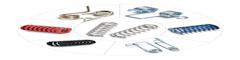


Вы когда-нибудь задумывались, как простой металлический объект, такой как витая пружина, может быть настолько универсальным и essential в нашей повседневной жизни? От автомобильных подвесок до канцелярских скрепок, витые пружины играют crucial роль в механике и инженерии. В этой статье мы глубоко погрузимся в мир витых пружин, отвечая на ключевые вопросы: что они из себя представляют, каковы их основные характеристики, и почему они так важны. Мы рассмотрим их типы, применение, производство и многое другое, чтобы вы могли лучше понять этот фундаментальный компонент.
1. Что такое витая пружина?
Витая пружина – это механический элемент, изготовленный из проволоки, свернутой в спиральную или винтовую форму. Она предназначена для накопления и высвобождения энергии при деформации, что делает ее идеальной для поглощения ударов, поддержания силы или возвращения в исходное положение. Основной принцип работы основан на законе Гука, который гласит, что сила, необходимая для сжатия или растяжения пружины, пропорциональна величине деформации.
Исторически, пружины использовались еще в древности, например, в луках и арбалетах, но современные витые пружины появились с развитием металлургии в промышленную эпоху. Сегодня они изготавливаются из различных материалов, таких как сталь, нержавеющая сталь, бронза или даже пластик, в зависимости от требований применения.
Витая пружина может быть классифицирована по своей функции: сжатия, растяжения или кручения. Пружины сжатия designed to resist compressive forces and return to their original length when the force is removed. Пружины растяжения, on the other hand, are designed to extend under load and return to their original length. Пружины кручения used to apply torque or store rotational energy.
Интересный факт: Did you know that the concept of springs dates back to the Bronze Age? Early springs were made from wood or bone, but metal springs revolutionized technology during the Industrial Revolution.
2. Основные характеристики витых пружин
Характеристики витых пружин определяют их производительность и применимость. Ключевые параметры включают:
- Жесткость (коэффициент пружины): Это мера того, насколько пружина сопротивляется деформации. Выражается в ньютонах на метр (N/m) или фунтах на дюйм (lb/in). Более высокая жесткость означает, что пружина требует больше силы для сжатия или растяжения.
- Материал: Common materials include music wire (для высокой прочности), нержавеющая сталь (для коррозионной стойкости), и фосфорная бронза (для electrical applications). Выбор материала влияет на durability, weight, and cost.
- Размеры: Включают диаметр проволоки, средний диаметр пружины, длину в свободном состоянии, и количество витков. Эти размеры directly affect the spring's load capacity and deflection.
- Напряжение и деформация: Пружины должны быть designed to operate within their elastic limit to avoid permanent deformation. Максимальное напряжение и удлинение are critical for safety and longevity.
- Температурная стойкость: Some springs are designed for high-temperature environments, using materials like Inconel or ceramic-coated wires.
Эти характеристики often standardized by organizations like ASTM or ISO to ensure quality and interoperability. For example, ASTM A228 specifies requirements for music wire springs, commonly used in precision instruments.
| Характеристика | Описание | Единицы измерения |
|---|---|---|
| Жесткость (k) | Сила, required per unit deflection | N/m, lb/in |
| Диаметр проволоки (d) | Толщина проволоки used | mm, inches |
| Средний диаметр (D) | Average diameter of the coil | mm, inches |
| Длина свободного состояния (L0) | Length when no force is applied | mm, inches |
| Количество витков (N) | Total number of coils | Dimensionless |
Understanding these characteristics is essential for selecting the right spring for a specific application. For instance, in automotive suspensions, springs with high stiffness are used to handle heavy loads, while in watches, precise stiffness ensures accurate timekeeping.
3. Типы витых пружин
Витая пружина come in various types, each suited for different purposes. The main categories are:
- Пружины сжатия: These are the most common type, designed to compress under load and return to their original length. They often have closed ends to provide a flat bearing surface. Applications include vehicle suspensions, mattresses, and industrial machinery.
- Пружины растяжения: Designed to extend under tensile load, these springs have hooks or loops at the ends for attachment. They are used in trampolines, garage doors, and various mechanical linkages.
- Пружины кручения: These apply torque when twisted and are common in clothespins, mousetraps, and door hinges. They store rotational energy and release it when the torque is removed.
- Специализированные пружины: Include constant force springs (用于 tape measures), disk springs (用于 high-load applications), and volute springs (用于 heavy-duty compression). Each type has unique geometry and properties.
The choice of type depends on the direction of force, space constraints, and environmental conditions. For example, in aerospace, lightweight and high-strength springs are preferred, while in marine environments, corrosion-resistant materials are essential.
Совет: When selecting a spring type, consider the operating environment. For high humidity or chemical exposure, stainless steel or plastic springs may be better than standard steel.
4. Применение витых пружин
Витая пружина ubiquitous in modern technology. Их применение spans numerous industries:
- Автомобильная промышленность: Used in suspensions, clutch mechanisms, and valve springs to absorb shocks and maintain pressure. Without springs, cars would have poor ride quality and reliability.
- Электроника: Springs are found in connectors, switches, and battery contacts to ensure reliable electrical connections. For instance, the springs in a smartphone's SIM card tray hold the card in place.
- Строительство и мебель: In furniture, springs provide comfort in sofas and chairs. In construction, they are used in door closers and window mechanisms.
- Медицинские устройства: Precision springs are critical in surgical instruments, prosthetics, and drug delivery systems, where reliability and cleanliness are paramount.
- Повседневные предметы: From pens and toys to watches and locks, springs enhance functionality and user experience. Imagine a ballpoint pen without a spring – it wouldn't retract properly!
The versatility of springs makes them indispensable. In fact, the global spring market is valued at billions of dollars, driven by demand from automotive and industrial sectors. Innovations continue, with smart springs incorporating sensors for monitoring health in real-time.
For example, in renewable energy, springs are used in wind turbine pitch systems to adjust blade angle, optimizing energy capture. This highlights how even traditional components evolve with technology.
5. Производство витых пружин
The manufacturing process of vitiated springs involves several steps to ensure precision and quality. Key stages include:
- Выбор материала: Raw wire is selected based on application requirements. Common materials include high-carbon steel for strength or nickel alloys for corrosion resistance.
- Формование: The wire is fed into a coiling machine, which winds it around a mandrel to form the spring shape. Computer-controlled machines allow for high precision and customization.
- Термическая обработка: Springs are heat-treated to relieve internal stresses and improve mechanical properties. This involves heating to a specific temperature and then cooling slowly (annealing) or quickly (quenching).
- Отделка: Surface treatments like plating (e.g., zinc or chrome) are applied to enhance corrosion resistance or appearance. Grinding may be done to flatten ends for better seating.
- Контроль качества: Each spring is tested for dimensions, load capacity, and fatigue life. Non-destructive testing methods, such as ultrasonic inspection, ensure defects are detected.
Advanced manufacturing techniques, such as additive manufacturing (3D printing), are emerging for complex spring geometries. However, traditional methods remain dominant due to cost-effectiveness for mass production.
Environmental considerations are also important. Recycling metal scrap from spring production reduces waste, and using eco-friendly coatings minimizes environmental impact.
Факт: The coiling process can produce up to thousands of springs per hour in automated factories, making springs one of the most mass-produced mechanical components.
6. Механические свойства и расчеты
Understanding the mechanical properties of springs is crucial for design and application. Key aspects include:
- Закон Гука: F = kx, where F is the force applied, k is the spring constant, and x is the displacement. This linear relationship holds true within the elastic limit.
- Усталостная прочность: Springs subjected to cyclic loading can fail due to fatigue. The S-N curve (stress vs. number of cycles) helps predict life expectancy. Materials with high endurance limits, like music wire, are preferred for dynamic applications.
- Критическая скорость: For springs in motion, resonance can cause failure. The natural frequency must be considered to avoid harmonic vibrations.
- Напряжение сдвига: The maximum shear stress in a spring coil is given by τ = (8FD)/(πd³), where F is force, D is mean diameter, and d is wire diameter. This must be below the material's yield strength.
Calculations often involve software tools like Finite Element Analysis (FEA) to simulate behavior under load. For simple designs, manual calculations using formulas from standards like DIN or JIS are sufficient.
For example, in designing a spring for a mechanical watch, precise calculations ensure that the spring provides consistent torque over thousands of cycles, crucial for accuracy.
| Свойство | Формула | Примечание |
|---|---|---|
| Жесткость (k) | k = Gd⁴ / (8D³N) | G - модуль сдвига материала |
| Максимальное напряжение | τ_max = (8FD) / (πd³) | Must be less than material yield strength |
| Деформация (x) | x = F / k | For small displacements |
These properties ensure that springs perform reliably in their intended applications, from heavy machinery to delicate instruments.
7. Факторы выбора витой пружины
Selecting the right spring involves considering multiple factors to match the application needs:
- Нагрузка и deflection requirements: Determine the maximum force and how much the spring needs to compress or stretch. Overloading can lead to failure.
- Пространственные ограничения: The available space dictates the spring's dimensions. Miniature springs are used in electronics, while large springs serve in industrial equipment.
- Окружающая среда: Consider temperature, humidity, and exposure to chemicals. For outdoor use, weather-resistant materials like stainless steel are ideal.
- Стоимость и availability: Standard springs are cost-effective, but custom designs may be necessary for unique applications. Lead times and supplier reliability are also important.
- Срок службы и maintenance: Springs in high-cycle applications need high fatigue resistance. Regular inspection and replacement can prevent unexpected failures.
Tools like spring selection guides or online calculators can aid in the process. Consulting with manufacturers ensures that the spring meets all specifications.
For instance, in the aerospace industry, springs must undergo rigorous testing to meet safety standards, often requiring certification from authorities like the FAA.
Рекомендация: Always test springs under actual operating conditions to validate performance before full-scale deployment.
8. Эксплуатация и обслуживание
Proper operation and maintenance extend the life of vitiated springs. Key practices include:
- Правильная установка: Ensure springs are installed without overstressing or twisting. Misalignment can cause premature wear.
- Регулярный осмотр: Check for signs of corrosion, deformation, or fatigue cracks. In critical applications, use non-destructive testing methods.
- Смазка: For springs in motion, lubrication reduces friction and wear. Use appropriate lubricants that won't attract dirt or degrade the material.
- Замена: Replace springs at the end of their service life or if they show significant wear. Keeping spares on hand minimizes downtime.
- Хранение: Store springs in a dry, clean environment to prevent corrosion. Avoid stacking them in a way that could cause deformation.
In industrial settings, predictive maintenance using sensors can monitor spring performance in real-time, alerting to issues before they cause failure.
For example, in automotive maintenance, worn suspension springs can lead to poor handling and increased tire wear, so regular checks are part of routine service.
9. Будущие тенденции и инновации
The future of vitiated springs is shaped by technological advancements and evolving demands. Emerging trends include:
- Умные пружины: Integration with IoT sensors to monitor load, temperature, and fatigue in real-time. This enables predictive maintenance and enhances safety.
- Advanced materials: Development of composite materials and shape memory alloys (e.g., Nitinol) that offer unique properties like self-healing or adjustable stiffness.
- Аддитивное производство: 3D printing allows for complex geometries that are impossible with traditional methods, enabling customized springs for specific applications.
- Экологичность: Focus on recyclable materials and energy-efficient manufacturing processes to reduce environmental impact.
- Миниатюризация: As devices become smaller, nano-scale springs are being developed for microelectromechanical systems (MEMS) and medical implants.
These innovations promise to make springs more efficient, reliable, and adaptable. For instance, in robotics, variable stiffness springs can improve agility and energy efficiency.
Research is ongoing in universities and industries worldwide, ensuring that springs continue to play a vital role in technology evolution.
10. Часто задаваемые вопросы (FAQ)
В: Что произойдет, если перегрузить витую пружину?
О: Перегрузка может привести к пластической деформации или поломке пружины. Это снижает ее эффективность и может вызвать отказ системы. Всегда работайте в пределах specified load limits.
В: Как выбрать материал для пружины?
О: Выбор зависит от применения. Для высоких нагрузок используйте high-carbon steel, для коррозионной стойкости – нержавеющую сталь, а для electrical applications – бронзу. Консультируйтесь со стандартами like ASTM.
В: Можно ли repaired сломанную пружину?
О: Обычно нет. Пружины underгоже热处理 и имеют specific microstructure. Repair attempts can weaken them. Лучше заменить на новую.
В: Как рассчитать жесткость пружины?
О: Используйте формулу k = Gd⁴ / (8D³N), где G - модуль сдвига, d - диаметр проволоки, D - средний диаметр, N - число витков. Онлайн-калькуляторы can simplify this.
В: Где купить качественные пружины?
О: У специализированных производителей или distributors. Ищите сертификаты качества и отзывы. Известные бренды include Lee Spring, Associated Spring, и местные suppliers.
Заключение
Витая пружина – это не просто простой компонент, а sophisticated engineering marvel that enables countless technologies. From their basic characteristics to advanced applications, understanding springs is key to innovation and reliability. Whether you're an engineer, a hobbyist, or simply curious, we hope this article has answered your questions and inspired further exploration. Remember, the right spring can make all the difference in performance and safety. Embrace the spring in your projects!
If you have more questions or need assistance, feel free to reach out to professionals or refer to resources like engineering handbooks and online forums. The world of springs is vast and ever-evolving – stay curious!