 1388xx888xx
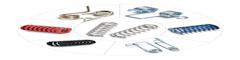

В современной промышленности эффективность оборудования является критическим фактором для конкурентоспособности и устойчивого развития. Одним из часто упускаемых, но крайне важных аспектов является выбор и настройка компонентов, таких как пружины сжатия. Эти элементы, хотя и кажутся простыми, играют ключевую роль в обеспечении надежности, долговечности и производительности машин. В данной статье мы подробно рассмотрим, как кастомизация пружин сжатия может служить мощным инструментом для повышения эффективности оборудования, основываясь на инженерных принципах, практических примерах и анализе будущих тенденций.
Введение в пружины сжатия и их роль в оборудовании
Пружины сжатия — это механические элементы, предназначенные для поглощения и хранения энергии при сжатии, а затем ее возврата. Они широко используются в различных отраслях, включая автомобилестроение, аэрокосмическую промышленность, медицинское оборудование и тяжелую технику. Основные функции пружин сжатия включают амортизацию ударов, поддержание давления, обеспечение возвратного движения и компенсацию вибраций. Стандартные пружины, доступные на рынке, часто проектируются для общих применений, но могут не полностью соответствовать специфическим требованиям конкретного оборудования. Именно здесь кастомизация становится незаменимой, позволяя оптимизировать производительность и снизить износ.
Эффективность оборудования напрямую зависит от точности и надежности его компонентов. Неправильно подобранная пружина может привести к повышенному энергопотреблению, частым поломкам и снижению общего срока службы машины. Например, в производственных линиях, где оборудование работает непрерывно, даже незначительные несоответствия в пружинах могут вызвать цепную реакцию проблем, таких как перегрев, шум и потеря точности. Поэтому инвестиции в кастомизированные пружины сжатия не только улучшают immediate performance, но и способствуют долгосрочной экономии за счет сокращения затрат на обслуживание и простоев.
Основы кастомизации пружин сжатия
Кастомизация пружин сжатия involves tailoring their design parameters to meet specific operational needs. Key factors include material selection, wire diameter, coil diameter, number of coils, and free length. Materials commonly used include high-carbon steel, stainless steel, and alloy steels, each offering different properties such as corrosion resistance, tensile strength, and temperature tolerance. For instance, in environments with high humidity or chemical exposure, stainless steel springs are preferred to prevent rust and degradation.
The design process begins with a thorough analysis of the equipment's requirements, such as the load capacity, deflection range, and operating conditions. Advanced software tools, like finite element analysis (FEA), are employed to simulate performance and ensure that the customized spring will function optimally under expected stresses. This proactive approach minimizes the risk of failure and enhances safety. Additionally, customization allows for innovations such as variable pitch coils or special coatings, which can further improve efficiency by reducing friction and wear.
In practice, customized springs are often developed through collaboration between engineers and manufacturers. This iterative process ensures that the final product not only meets technical specifications but also integrates seamlessly with the existing equipment. For example, in the automotive industry, customized suspension springs are designed to provide a smoother ride and better handling, directly contributing to vehicle efficiency and customer satisfaction.
Преимущества кастомизации для повышения эффективности
Кастомизация пружин сжатия offers numerous benefits that directly translate to improved equipment efficiency. Firstly, it enables precise load matching, meaning the spring can handle the exact forces required without over- or under-performance. This reduces energy waste and minimizes stress on other components, leading to lower power consumption and extended lifespan. In heavy machinery, such as construction equipment, customized springs can enhance stability and reduce vibration, resulting in smoother operation and less material fatigue.
Secondly, customization improves reliability and reduces downtime. Off-the-shelf springs may have tolerances that are too broad for critical applications, but tailored springs are manufactured to tight specifications, ensuring consistent performance. This is particularly important in industries like aerospace, where failure is not an option. By using springs designed for specific conditions, companies can avoid unexpected breakdowns and maintain high productivity levels.
Thirdly, economic advantages are significant. While customized springs may have a higher initial cost compared to standard ones, they often lead to long-term savings through reduced maintenance, fewer replacements, and improved overall equipment effectiveness (OEE). A case study in the manufacturing sector showed that switching to customized springs reduced machine downtime by 15% and energy usage by 10%, demonstrating a clear return on investment.
Практические примеры и case studies
To illustrate the impact of customization, consider the example of a packaging machine in the food industry. Standard springs used in such machines often fail due to constant cycling and exposure to moisture, leading to frequent stoppages. By customizing springs with corrosion-resistant materials and optimized dimensions, a company was able to increase machine uptime by 20% and reduce maintenance costs by 30%. This not only boosted efficiency but also ensured compliance with hygiene standards.
Another example comes from the renewable energy sector, specifically wind turbines. The blades and mechanisms in turbines are subject to extreme forces and environmental conditions. Customized springs in the pitch control systems help maintain optimal blade angle, improving energy capture and reducing wear. In one project, tailored springs made from high-strength alloys increased turbine efficiency by 5% and extended service intervals, contributing to more sustainable energy production.
In the medical field, equipment such as surgical robots requires极高 precision. Customized springs are used in joints and actuators to provide smooth, reliable movement. A hospital reported that after implementing bespoke springs in their robotic systems, procedure times decreased by 10%, and accuracy improved, leading to better patient outcomes and higher operational efficiency.
Будущие тенденции и инновации
The future of spring customization is closely tied to advancements in materials science and digital technologies. Smart materials, such as shape memory alloys, are being explored for springs that can adapt to changing conditions in real-time, further enhancing efficiency. For instance, a spring that adjusts its stiffness based on load could optimize performance across different operating modes without manual intervention.
Additive manufacturing, or 3D printing, is another emerging trend that allows for highly complex spring designs that were previously impossible with traditional methods. This enables rapid prototyping and production of customized springs with intricate geometries, reducing lead times and costs. In the coming years, we can expect to see more integration of IoT sensors in springs, providing data on performance and wear, which can be used for predictive maintenance and further efficiency gains.
Moreover, sustainability is becoming a key driver. Customized springs made from recycled materials or designed for easier disassembly and recycling are gaining traction. This aligns with global efforts to reduce waste and carbon footprint, making equipment not only more efficient but also environmentally friendly.
Заключение и рекомендации
В заключение, кастомизация пружин сжатия представляет собой мощный подход к повышению эффективности оборудования across various industries. By addressing specific needs through tailored design, companies can achieve significant improvements in performance, reliability, and cost-effectiveness. As technology continues to evolve, the possibilities for customization will expand, offering even greater benefits.
Для предприятий, рассматривающих возможность кастомизации, рекомендуется начать с тщательного аудита существующего оборудования и определения областей, где стандартные компоненты не optimal. Сотрудничество с опытными инженерами и производителями является crucial для успеха. инвестиции в кастомизированные пружины могут initially require higher upfront costs, но долгосрочные выгоды в виде reduced downtime, lower energy consumption, and enhanced productivity make it a wise strategic move.
В конечном счете, в competitive industrial landscape, every advantage counts. Кастомизация пружин сжатия — это не просто техническое усовершенствование, а ключевой элемент в стремлении к операционному совершенству и устойчивому growth.